CEO Interview Series With Brett Weber of Southern Technical College
Brian McDonald, Managing Director at Houlihan Lokey, sat down with Brett Weber, CEO of Southern Technical College, to discuss the future of Skilled Trades and Allied Health education. Watch the full video below to learn more.
My name is Brian McDonald. I’m a Managing Director at Houlihan Lokey. I co-lead the Education practice here. And today, we have a continuation of our CEO interview series with Brett Weber, the CEO of Southern Technical College, which is a for-profit career school that teaches a curriculum across both allied health and skilled trades. And Brett has been in the education space for many years, and we’re really pleased to have him here today to tell us more about Southern Technical College, STC. So, maybe to get started, Brett, welcome, and, would love to just hear a little bit about your career trajectory. I know you’ve been in the education space for a couple of decades. Maybe give us a little background, and tell us what brought you to STC. I thank you very much for having me today, I greatly appreciate it. I’ve been in the career education industry for about twenty-five years and served several functions. I came to STC as the CEO in early 2023 when the previous CEO retired, and it was a great opportunity to grow a bigger organization. I like the program mix and think the opportunity here is fantastic for continued growth. Previously, I served as the Chief Operations Officer at ATA College, and that experience taught me a lot of things in terms of how everything needs to work together: admissions, financial aid, career services, compliance. Everything has to work together to succeed. And I saw that working well at STC when I joined, and I’m very excited about the opportunity in the future. Well, Brett, you’ve had a real, long, and distinguished career in the higher ed space with 25+ years. What is it about this sector that keeps drawing you back in and keeps you motivated? And what is it about the role that the schools play in the local communities that really helps to drive your passion for this type of business? I love the tangible impact of career education. Many of our students are working adults. Some of them are single moms. They juggle careers, or, you know, low-wage jobs, and oftentimes, they want a new path for a better career and a better life. When our students graduate with these skills, they take higher-paying jobs and they can support their families and change their lives. And that’s very meaningful to me. We also... We deliver both to the students and to the employers because there’s such a strong need in the industry. I’ll give you a quick example. We recently had a student at our Tampa campus that was enrolled in our electrical technology program. And our staff, after a few weeks, they kept saying that the student was the first student on campus every day, and he was also the last student to leave at night. And we found out that he was homeless and living in his car at the campus in the parking lot. So, our staff was able to help find temporary housing for this individual. We provided him with ongoing support throughout the entire time he was at the school, and he graduated. And he now has permanent housing, and he is employed as an entry-level electrician and making about $60,000 a year. So, that... That’s what does it for me. That’s a great example and a great story and just a terrific feeling to be able to have that kind of an impact. It is. And we have those stories every day at every campus. So, Brett, Southern Technical College offers courses across both the allied health and the skilled trades professions, including everything from nursing and sonography on the allied health side to HVAC and welding on the technical skills side. Tell us about how that portfolio came together. What’s the logic of that portfolio, and how does that all work together in a single institution? Sure. Our portfolio covers many careers, but the strategy is consistent. Healthcare and trades both have shortages of qualified workers combined with growing demand for workers. These are hands-on sectors that are not at risk of being replaced by AI. And the mix also gives us balance. Demand does not depend on one sector, occupation, or a single market. These occupations are well-trained people. We always ask ourselves at STC: Is the student getting the benefit of the bargain? That is, if they enroll in our school and do the work to learn the material, will they have a path that pays well? And every program in our portfolio passes that test. Our program mix has come together over the years by listening to our community partners. We identify where there are shortages, and we try to put programs together that meet those needs. And all of those programs pass the federal earnings accountability test as well. So, Brett, I understand that more of your programs are moving to an online or a hybrid delivery format. How does that hybrid delivery enhance the student experience and the operating model? And how are you able to determine which elements of the curriculum are done via the online or hybrid approach versus hands-on in the classroom? We use each format for what it does best. Didactic material can be delivered online through synchronous and asynchronous learning, while labs, clinical experiences, externships remain hands-on, in person. Hybrid is not suitable for practice, right? But moving didactic to online has been good for both the students and for the school. Hybrid increases the flexibility for our students, requiring them to be on campus fewer days a week. It makes the school more manageable alongside their work and family schedules. It also saves them money on transportation expenses. A reaction from the students has been incredibly positive since we made the change. For the business, it has three positive impacts. One, hybrid has opened up additional classroom space for us, allows us to better optimize how we use our facilities, it allows us to increase student capacity at our existing campuses, and it drives down the real estate costs relative revenue. Number two, it improves student performance in the hybrid format because it’s reduced the number of students who drop from the program, which means we have more students graduate, and we have higher populations. And finally, students are on campus fewer days a week so they could commute longer distances, which for us, it increases the effective service of each of our existing campuses, allowing us to grow, you know, without growing our footprint. We started the process to move to hybrid in early 2025 at our Orlando campus, and that expansion has continued and will continue through the end of our second quarter in 2027. So, Brett, STC operates a number of campuses across Central Florida, Tampa Bay, and Southwest Florida, and you’re really embedded in the local communities in each of your campuses. How are you able to maintain a consistent quality of delivery for the student across all the different campuses while also being really deeply embedded in each of the distinctive communities? Each campus has a unique culture, but it’s still completely STC. Our curriculum, policy, and procedures, our best practices, they’re the same at every campus. We centralize standards for key functional areas, consistency across the network. Our directors and our teams are empowered to immerse themselves in their community, where they build valuable relationships with employers, high schools, workforce development agencies, Chamber of Commerces, and other areas that can respond to local needs. It helps us build a team in the community that we’re all striving toward the same goals. And while our campus directors are focused on their local communities, we have regular meetings with our team, with all of our campus leadership, which results in cross-pollination of ideas and best practices. And one of those examples is the hybrid. We started it in Orlando, and we’ve now cross-pollinated that to the other campuses. And, Brett, are you able to offer both skilled trades and allied health together on on a single campus, or are your campuses focused on one or the other? All of our campuses have a program mix of both. Not every campus runs the same programs depending on the market. However, they both... All the programs do offer a mix of, allied health and trades as well. Well, that’s great, Brett. It sounds like you’ve got a real, established playbook across all of your campuses. What does it take to... How portable is that playbook? And are there any prerequisites you would need to see in a new market that would lend itself to the STC playbook? Our playbook is portable and scalable by design. We have central support functions across the networks, marketing and missions, financial aid, compliance, accounting. Those can easily support additional campuses in state and out of state. During my tenure, we focused on refining the campus-level operating model, which is now finely tuned. And we’ll continue to roll out existing programs across all of our campuses, and we’re always exploring new programs. At some campuses and some programs start to reach capacity, we have to add space to to meet the demands. For example, in Sanford, we are doubling our welding space. That new location will be open by the end of the year. We are seeking out new space in Auburndale. And our Fort Myers campus will be moving to a new state-of-the-art facility by the end of this year, adding another 25 to 30% additional space for us. The next step would be for us to open new campuses. We have a very large growth runway in Florida, which is a... You know, because it’s an attractive market from the demographic, economic, and regulatory perspectives. But our first focus is on expansion in Florida. But the model will work well in other states, and we can certainly grow to be a significantly larger multistate organization. And, Brett, are you able to kind of scale up and down on an individual campus based on the demand patterns for particular career fields? Is that is that something that you can flex? Yes. Certainly. Yes. You know, some of the, campuses were kind of lane-locked, I guess you would say. So it limits our growth without looking for new space, but we do that. For example, our Orlando campus has three different, buildings within a quarter of mile of each other, and that has allowed us to continue and accelerate our growth at that campus. So, Brett, it’s well-known that there are skills gaps in both allied health and the skilled trades. And I’m curious, what are you hearing from employers in the communities that STC serves about the skills gaps and and the shortage of talent? In the markets we serve, there are severe long-term shortages in the workforce. Healthcare and skilled trades each have long-term secular employment demand drivers with constrained supply. Right? So, for example, HVAC and electrical jobs are projected to grow 18 to 23% in the next decade. And in Florida, there are currently 13 unfilled jobs for every student we graduate. Things... The hurricane rebuilding, year-round HVAC demand in Florida, all reflect growing maintenance and construction demand, along with the insatiable demand now for the AI infrastructure build-out. It’s just driving demand up and up. On the healthcare side, you’re seeing population growth, aging, and increased healthcare needs. The Florida Hospital Association projects a shortage of 59,000 nurses by 2035. I recently saw a healthcare study where 85% of the respondents said that they’re critically short-staffed, which is impacting care, related care disruptions. And on the skilled trade side, shortages are threatening project schedules, creating elevated costs to finish jobs, which creates burnout and injuries. These problems can’t be fixed by throwing money at it. It requires creating more skilled workers through programs like ours. Brett, how do you think STC was really built for the time and the market that we’re in right now? I know there’s been more of an emphasis on shorter-term courses that are really directly aligned to specific career needs. Can you comment on how you’ve seen the industry evolve and and how STC has reacted to changes in the marketplace? STC is built for this moment, and we’re ready to capture the demand. We have the right program mix of hands-on skilled-focused training that prepares individuals for careers in these high demand fields. We have strong business and government partnerships in the community, and they want STC graduates. These local employer relationships provide program-level feedback too that helps us respond to employer needs. And we have a leading health system in South Florida and Fort Myers area that hired last year about almost 40% of our nurse graduates, and they need more. From an industry perspective, there has been an evolution to a more student-focused orientation. There’s greater transparency now and accountability in our sector around completion rates, licensure, placement, and student value. And this allows students to be more informed as they make their decisions looking for the right school. That’s a good segue to our next topic, Brett. One of the things you really need to do is listen to employers and then react by lining up your curriculum, your technology, and your faculty with the specific needs of the employers in terms of the talent and the positions they’re looking to fill. That’s easier said than done. Talk a little bit about how you do that in practice. As we talked already, you know, healthcare and trades jobs are constantly evolving. The demand is great. As they evolve, there are needs employers and demand in the local markets that we need to learn about. Our job is to stay in tune with these changes so we know what to do with this. We have open dialogue with these employers. It allows us to constantly evaluate and modify our program mix. Every campus has an advisory board, members of the community that join us. These are employers. They could be small business owners, HR staff from larger companies. We have representatives from the local vocational rehab offices and graduates. And they all provide guidance to us on curriculum. They discuss new technologies, communicate specific needs they have in the field. They give us ideas on how to stay current and continually improve our programs, which we do. An example would be we had our advisory board meeting in Port Charlotte, one of our campuses in South Florida for our electrical program. And through that meeting, we just kept hearing that they had... They see a great shortage for HVAC in that market. So we did our research. And based on the feedback we got from the advisory board, we opened the HVAC program at that campus. So this was at the end of 2024, I think. And we now have over 100 students enrolled in that program down there. So that’s just one example. How quickly can you pivot and turn on a new program like that? Does that take a year or six months? What does that look like in practice? If it’s a program that we currently offer at another campus, in case of HVAC, it was. If it’s a new program to the organization, that requires more approvals through your accrediting agency, the Department of Education, and that could take six to 12 months. And that includes research and everything else you need to do to get it up and running. Brett, some of your instructors are professionals who are working in the fields that they’re teaching. How does that shape the student experience, and how do employers think about that that type of learning environment and and instructional environment? Sure. Many of our faculty members still work in the field, and others had long careers in the field and now workforce full time. These... A lot of the faculty are drawn to the mission and love student engagement. And, you know, they oftentimes get schedule flexibility that they didn’t have in the field, and they really enjoy helping train the next generation of skilled workers. The real life work experiences that they bring, they can connect the concept from a book to what actually happens at a job site or a lab or the real world setting, and that’s just tremendous learning opportunities for our students. Also increases student engagement by making these lessons more applicable to them and gives them practical context for what it’ll be like when they’re on a real job. Local employers love STC graduates. They’re high quality. They’ve got the skills. They can hit the ground running. And we have very high employment rates. Our creditor requires 70% placement rates at each program at each campus. And many of our programs... All of our programs hit 70%, but many of them are in the 80 or 90% range annually. Brett, I’m sure the typical STC student comes to you wanting a really clear path to a job. And I know that many of your students are adult learners who are either taking classes at night or maybe during the day. They’re either going for a diploma or an associate’s degree. What does a successful outcome look like, and how do you prepare students for that kind of an outcome? For us, the fundamental question is always: Is the student getting the benefit of the bargain? Meaning, if they go to our school, they work hard, learn the materials, Are they on the path for a job that pays well? And for all of our programs, the answer is yes. Everyone at STC is always focused on outcomes, which means getting our students to the finish line, help them find a career in the field. Our students... I mean, it starts with the front desk. The first time a student walks through our doors, how they’re greeted, when they meet it with admissions, and the admissions department works with that individual in helping them identify the path that might be best for them. Then you have financial aid, student services, career services. All these departments work together to give the student the support they need to graduate. And our career services department, they work with the students before they finish on helping them build resumes, interview skills. They help them apply for jobs. Our career service departments have career fairs every term for our students. We may have 20 or 30 employers at each campus meeting these students. And as I mentioned before, a lot of our students find employment before they even finish the program. I’m curious. What do you hear from your graduates and from the employers that hire them? You clearly do a really good job of helping the student get through your program and get into the workforce. I’m curious what kind of feedback you hear once they’re in the workforce from both the student and from their employers. Yes. We’re always getting feedback, and it’s critical for us on how we shape our programs, as you said. Our graduates, employers, and community, and we use that feedback to modify and update our programs constantly. We’re doing that. It’s a living... All of our programs are living programs. They’re always evolving to ensure that we are current with the trends that are in the community. Brett, you got your hands full with operating multiple campuses. But as you look into the future, where does STC go from here? Do you... Are there new programs? Are there new geographies that you want to get into? How do you see the business evolving over the next three to five years? Yes to all the above. We’re very excited about the future, and we have plans to grow the organization with new programs, including trades, online offerings, and new campuses in Central Florida. We’re on a great growth trajectory, and I think our runway is much longer than three to five years. Our success is having more and more students graduate and enter the field and on markets that we serve. I think there’s a clear path to more to double our number of graduates and placements every year. That’d be incredibly gratifying to me. When you think about expansion into a new program or a new geography, for that matter, what are you looking for? What has to be true for that program or that geography to be successful? What are you looking for in the marketplace to validate the decision to go forward with a new offering or a new location? We... First of all, we typically get program ideas from our community partners, prospective students, or even some of our staff. So the first step is always to do a feasibility study in the market. We always include our advisory boards in the process. We get their perspective so we can see the demand signals firsthand. And we’ll only start a new program that leads to jobs with good wages that could support a family. If it... If we can’t answer that question, we won’t start the job. We want our students to be successful and have high-quality earning potentials when they finish the program. We always come back to that core question every time we’re looking to do a new program. We can add new programs. It’s the key, really, for us to continue to grow, but we have to be in-line with the market trends and demand. And we consider that a core, you know, capability for the school. Sounds like you’ve got a really bright future, and I wish you all the best. And thank you for taking the time today. It’s been a pleasure learning more about STC. Well, thank you very much. I greatly appreciate the opportunity. Thanks again.
Contacts
-
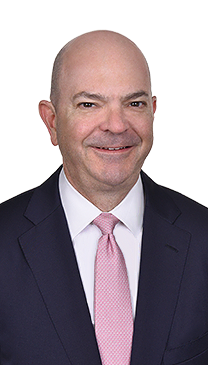
Brian McDonald Managing Director
-
Simon Gluckstein Managing Director

-
James Local Managing Director

-
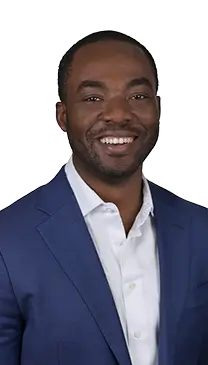
Nana Kyei Managing Director
-
Timo Maier Director

-
Kyle Van Vlack Vice President