CEO Interview Series With Chris Lofton of Zollege
Nana Kyei, Managing Director at Houlihan Lokey, sat down with Chris Lofton, CEO of Zollege, to discuss the intersection of healthcare, workforce training, and student debt, and how Zollege’s hybrid model is transforming healthcare education. Watch the full video below to learn more.
A successful student outcome is a job. It’s a job that a student loves. It's it's a launch of a career. Jobs are what pay the bills. Jobs are what put food on the dinner table, and jobs are what give young mothers the chance to give their kids a better life. Hi, everyone, and welcome to the next installment of the Houlihan Lokey Education CEO Interview Series. I’m excited about this conversation today. We have a great conversation with a great CEO about a business that is driving innovation in allied health and empowering young professionals seeking economic empowerment and mobility. It is proving that there is a path towards economic mobility that does not come at a great cost. As I call it, doing well by doing good. Today, I’m joined by Chris Lofton, CEO of Zollege, a platform that helps students who are seeking opportunities in healthcare. Before we get into the business itself, I think it’s helpful to understand the perspective behind it, Chris, and leadership context matters. So why don’t you start, Chris, maybe introduce yourself, walk us through your career journey from the classroom to building this wonderful platform, and what ultimately led to you joining this mission. Yeah. Absolutely. So, education is so important, and I experienced that in San Antonio, Texas, as a teacher for KIPP and Teach For America. And I realized that with the right approach to education, we can help students discover their potential in life. And unfortunately, the current state of our education system in this country is broken. Really, the current system is serving about 25% of learners. And so what we’re doing at Zollege is building a higher education option that puts students first that says, what do learners really need to experience economic mobility and empowerment to live the life that they wanna live? And the answer to that is affordable education that doesn’t require student loan debt. That is priced in a way that students can afford to pay out of pocket for their training, and at the same time students can continue to work in their full-time jobs or earn a living in other ways while they’re in school. So we have a convenient schedule for students, a low price, and very strong, you know, graduation placement rates. So Zollege was started obviously by practicing dentist, Dr. Ince, who couldn’t find trained assistants. How about that founding idea made you want to jump in here, and what has that continued to inspire? As you talk so passionately about it. Oh, it’s a great founding story. The first school was founded out of an industry need. Like, it was about hiring students. Dr. Thomas Ince could not find well-trained dental assistants. Furthermore, the ones that he found were $25,000 in debt, and that’s not a good place to be. And so, he thought he could do it better, and so he opened up a school in the in the training room in his office, and he started training dental assistants. This is not education for education’s sake. This is education for the students’ sake. It’s becoming apparent that our current education system and the high cost isn’t a great return on investment. And the government’s starting to change the rules, and it’s becoming more and more difficult to offer Title IV-funded programs. Our current system is serving itself and not students. And it’s time to do something about it. Zollege exists to collapse the price of education. We want to make education risk-free. We want to celebrate students who pursue higher education and not put them in debt for the rest of their lives. And we don’t wanna punish them for making a mistake when they’re 18 years old, that they have to pay for when they’re retired. It’s wrong. It’s time to stop. It’s time to reimagine what education could look like in this country, and Zollege is here to do that very thing. We’re starting with healthcare training. And if we don’t, we’re not gonna have the healthcare workers that we need. We have people with potential that want to contribute and don’t know how, and then we have a healthcare system that needs them. I feel like Zollege was built just for a moment like this. So why don’t we talk a little bit about how intentional you have been as you build kind of that bridge between point A and point B? What I discovered is that career schools are the solution to inspiring the next generation to care about the future and contribute. So we intentionally have said no student loan debt. We don’t want it. We do not take Title IV student loan funding. Instead, we price our education programs in a way that students can afford to pay out of pocket. We structure them such that students can continue to work while they go through the program. And with that, we create the most affordable and accessible dental and medical assistant education possible. It’s because of that that our completion rates are so strong. If you look at the Title IV full-time competitors, their completion rates are not as strong. If you look at online, their completion rates are like 40%. If you look at community colleges, their completion rates are 25%. If you look at four-year degree programs, they’re 55 to 60%. But we’re 80, 85% depending on the program, sometimes 90%. Chris, I think one of the fascinating parts of Zollege is actually how you’ve built it. Most schools build classrooms, and then look for clinical partners, and then hope they can find students, but when you go down that kind of trajectory or trend, you lock in such a huge price point out of the gate. Zollege does the opposite. Why don’t you talk to us a little bit about that business model: students training inside dental and medical offices smartly using latent demand to lower the cost, but at the same time, like, taking advantage of the fact that these offices are there and it allows you to get close to the student. Like, why don’t we talk a little bit more about that actual organization? Because it sounds simple, but I know it’s very complex, and it was very intentionally built. Yeah. Absolutely. So the way our model works is we partner with dental and medical offices that are seeing patients usually at 8:00 a.m. to 5:00 p.m. each day, Monday through Friday. But on Saturday, these practices are typically closed. How we approach these practices is we offer them an opportunity to monetize their offices during off hours. So Saturday or evenings, when there wouldn’t be revenue generation, now there is, when they partner with us. That’s one reason that we have partners, but the other reason is actually they need to hire assistants. It allows us to open a school for $20,000. And that school, when it matures, will generate on average $200,000 a year in revenue. And so it’s very capex-light for a very small investment. We can open up a new school, and now we can serve students that are near that location or in that new market with this affordable education that leads to a job. And by doing that, we don’t open a large campus and add a bunch of programs and just try to, you know, monetize our classroom space. No. We partner with clinics, and these clinics are giving students a realistic experience of what it’s like to work in the career in which they’re studying and increases their confidence and the relevancy of their training. The structure of that you use that allows you to deliver at a fraction of the typical cost. It seems so intuitive to me. Why is this so difficult for others to replicate? Most healthcare training organizations don’t have the tech enablement that we do here at Zollege. So, we put technology at the forefront from day one when we joined in 2019, and we’ve continued to benefit from that. As technology gets better, we get better. Being able to organize, you know, 300 physical classes every Saturday serving 3,500 students is logistically challenging. But with technology, we can find ways to do this more efficiently. The regulatory landscape is challenging, and you have to know what you’re doing. We were fortunate to get started in the state of Texas. There are around 700 career schools in the state of Texas, and 100 of them are ours. So we’re pretty established here and have a great relationship with our regulator here, but they are very strict. And so, we built the systems early on to be able to maintain good standing with our regulators. And doing that at scale is exceedingly difficult. Doing it at scale while maintaining, you know, affordable price to students and still being a profitable business is extremely difficult. But, you know, we’re here to take on the hard problems that are necessary to solve this problem for our students and our country. And we’re willing to find ways to innovate. We’re gonna use technology. We’re going to use different resources and tools to keep our price down while continuing to deliver the highest quality there is, both for our regulators, our hiring partners, our instructors, and ultimately our students. You know, a promise of zero debt, and for folks who don’t know, that is where the “Z” in Zollege comes from, is zero debt. The vision was always about zero debt, but that only really matters if graduates get great jobs and they’re just as equipped as anyone else on the street who they’re competing with. What does a successful student outcome look like at Zollege, and how do you make sure students walk in day one ready for their employers? A successful student outcome is a job. It’s a job that student loves. It’s a launch of a career. Jobs are what pay the bills. Jobs are what put food on the dinner table, and jobs are what give young mothers the chance to give their kids a better life. And so, success is a job for our students, and success for our partners is recurring hiring of our students. 40% of our students are placed in employers that have hired multiple students from us. We’re building this flywheel. We get our students in, we build a relationship with that employer, and they come back for more. There’s no better endorsement than a repeat employee of your students. So that’s, I mean, especially with 20,000-plus students that you have trained, when you have 40% being hired by existing, that is really... You are driving real meaningful impact, Chris. We use hybrid learning, you know, informed by our partners and dental medical assistants to give them the the concepts, familiarize them with the important procedures, and then in person, typically each Saturday, we practice again and again drawing blood, taking vitals, taking impressions, setting up X-rays, and they do it multiple times within the program so that when they show up at our our partner’s office to begin their career as dental medical assistants, they know what they’re doing, and most importantly, they’re confident enough in the the job itself, the skills necessary to do the job, that they can focus on patient care. Because this is about delivering excellent patient care. Every practice wants their patients to be taken care of, and we are producing dental medical assistants that put patient care first and have enough training experience to be considerate and kind to the patients coming into their clinic. You now operate well over 250 locations across 30 states. That is impressive. I think you mentioned earlier you’re tracking towards 300 by year-end. Opening and running that many locations is no small feat. What does the playbook for launching a new campus look like, and what have you learned from doing it repeatedly? I know you touched on snippets of it, but just walk us through what that playbook looks like. We have to find the right people. The people are what matter. So finding the right lead instructor, finding the support instructors, making sure that we have a regional trainer that’s there to onboard and support during those first few classes, that’s essential. Because if you have the right people, they’ll figure the rest out. All of our instructors have a coach. I believe everyone needs a coach. A coach helps us improve, helps us grow, because every student matters. We have to go above and beyond to make sure every single student walks across that stage at graduation and, most importantly, walks into that job Monday at 8:00 a.m. Got it. And so Chris, Zollege started in dental assistant training and has since expanded into medical. What did that expansion teach you about the model and the ability to scale it beyond these two career tracks? So in dental, we expanded more slowly, and there’s a lot of learning. But with medical assisting, we had all of that knowledge that we could utilize. And so, three years ago, we served 1,250 medical assistants. Last year, we served 2,500, and this year, we’ll serve over 5,000 medical assistants. So furthermore, we are piloting a CNA training program and a phlebotomy training program here in Austin, and we believe that once we perfect that model, we will also be able to scale. Talking about the model, so the model, in this model, the practice is the classroom; it is the instructor pool, if you will, and very often the employer. That is a very different relationship than a typical school-employer partnership. How have you built this network of practices that keep choosing to host, teach, and obviously hire your graduates? How do you nurture that relationship? If you talk to providers, healthcare providers, you’ll find that they always need good help. They always need... They could always serve patients better and more patients if they add more well-trained, quality assistance. And so I think at the end of the day, we are solving one of their biggest problems, which is recruiting talent. Retention is an even bigger problem. Right. And so the way that our model is set up, our students pay their own way through the program. They are not getting a student loan debt that allows them to take it easy for a few months, nine months, whatever, two years, whatever, as they go to school. Instead, they’re out driving Uber or working in the service industry to come up with the money to make that payment each week. They’re simply hungrier than Title IV student loan program graduates. And that leads to higher retention and more commitment. I think by giving that to our students, they repay it back to our partners. And I think that’s why our partners are so interested in expanding with us. That’s why they ask us first when they’re hiring. You know, Chris, I know we’re just around running out of time, so maybe I’ll be remiss if I don’t ask you this question. Obviously, great business; you have a lot on your plate, but where does Zollege go from here? How are you thinking about bringing AI into your curriculum, into your operations? I’m sure you’ve thought about it, as well as new healthcare roles that you can go into. What does the next three to five years look like for you on that roadmap? Zollege is going to be the first education business on the S&P 500. And the way that we’re gonna do that is we’re gonna continue to put students first and make sure we’re delivering for our hiring partners. So we are going to scale up to 1,000-plus dental medical assistant schools. The demand is huge. There’s a ton of opportunity to continue to grow. 50,000 open dental assistant jobs every year; 100,000 open MA jobs every year. We are expanding into nursing aides. There are 200,000 nursing aide positions open every year. Phlebotomists: 20,000 open roles every year. And we’re gonna continue to explore more healthcare-related training options. And then when we look at AI, I think it’s a really exciting opportunity, and Zollege is very well positioned to benefit from the advances in artificial intelligence. So, the way I describe it is that we need our learning platform, our LMS, we need our learning experiences to be as engaging as TikTok or Netflix. Because if I’m supposed to be learning, but then my phone is right here, I might have Instagram open. It’s really a war for attention, and to win this and to really empower students to change their lives, we need to provide engaging learning experiences that students want to consume, and they want to focus on. Like, at the end of the day, this is a services business, and services means humans interacting, and the way that we serve our students and the way that we continue to inspire students is with relationships, is with humans interacting with humans and inspiring them. There’s a beauty in the complexity that feels simple that you have built, and I’m watching you talk about it and, I mean, obviously, you absolutely believe and live by this, and this is great to watch. So much that when you left, you couldn’t stay away and you came back. What brought you back to this mission? I mean, can see it, and I can just see how excited you are when you talk about it, and what has changed since you came back. When I got the opportunity to come back to Zollege, it was like a rebirth, a second life, you know. It was a chance to use what I had learned to do right by our team and our students. Of course, I stopped what I was doing. I went right back to work at Zollege to realize our vision, which is that every healthcare worker should have affordable, accessible education without student loan debt. It’s just so big and so important. And then when I came back to the business, I had the, you know, A/B test. I knew what worked first 10 years of the business. I knew what didn’t work three years in the business, and I knew exactly what I could do to get the business to grow again. The last two years, the business has grown 50% each year, and the reason is, is because we invested in new schools. The new school engine is what drives growth for this business. We’re glad you’re back because like you said that it has... There’s a meaningful impact that this business is driving, and so glad you’re back 50% growth is quite impressive to hear about. You know, Chris has this ambitious vision of... Like you you heard him talk about one of them, is first education business on the S&P 500, and at the same time, be a critical tool to help reduce student loan debt below 1,000,000,000,000. Those are ambitious big goals, and I would not bet against Chris and Zollege to achieve that. Chris, we thank you so much for your time, for what you’re doing in no small way to really drive this economic mobility and help solve the student loan epidemic that is so evident and so prevalent in the lives of a lot of our young professionals. It was a pleasure spending time with you, and look forward to watching you continue to soar. Thanks for the time, Chris. Thanks, Nana; it was wonderful. Appreciate you.
Contacts
-
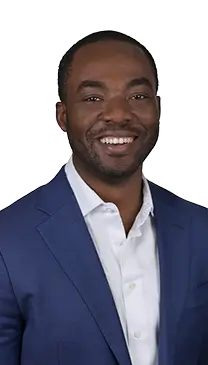
Nana Kyei Managing Director
-
Simon Gluckstein Managing Director

-
James Local Managing Director

-
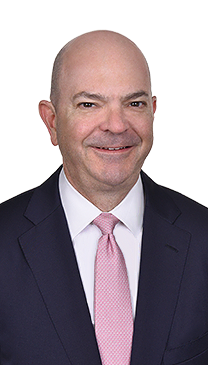
Brian McDonald Managing Director
-
Timo Maier Director

-
Kyle Van Vlack Vice President